
Japanese street food is some of the most exciting food you can eat — quick, affordable, and packed with flavor you rarely find in sit-down restaurants. Whether you’re wandering through a summer matsuri (festival) or ducking into a covered market alley, the options are endless and almost always worth stopping for.
Japan has a deeply rooted street food culture built on precision and pride. Even a vendor selling skewers from a small cart takes their craft seriously, using quality ingredients and time-tested recipes that haven’t changed in decades. This isn’t fast food in the throwaway sense — it’s cooking with real intention.
What Makes Japanese Street Food Unique
Unlike many street food traditions that rely on heavy spice blends to carry flavor, Japanese street food balances umami, sweetness, and texture. The goal is always to highlight the ingredient itself — not bury it under sauces or seasonings.
Street food here also comes with a strong sense of place. Popular Japanese street food in Osaka is completely different from what you’d find in Tokyo’s harajuku district, and festival food at a rural shrine differs from what vendors sell at a covered shotengai (shopping arcade). Knowing the regional character of each dish makes eating it more interesting, and gives you a reason to keep exploring even when you think you’ve tried everything.
The category of Japanese snack foods is enormous, stretching from convenience store staples to hand-crafted festival treats. This guide covers the classics — what they are, how they’re made, and where you’re most likely to find them.
Takoyaki: Japan’s Most Famous Street Snack
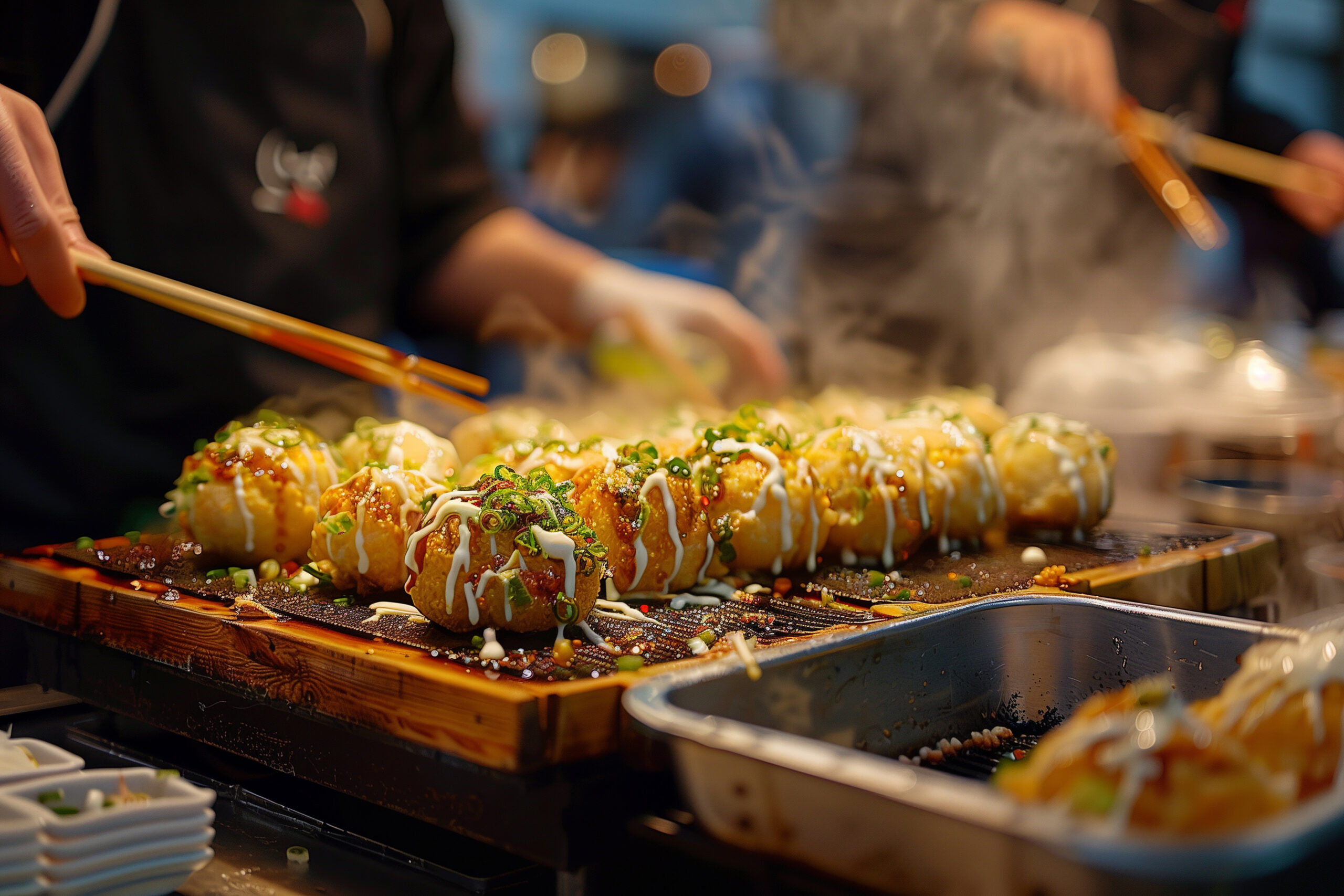
If there’s one dish that defines Japanese street food, it’s takoyaki. These round, golden balls of batter are made in a specialized cast-iron pan with hemispherical molds, and each one hides a piece of octopus inside.
Takoyaki originated in Osaka in 1935, created by street vendor Tomekichi Endo, who is widely credited with both the dish and the distinctive pan used to cook it.
What Is Takoyaki Made Of
The batter is a simple mix of dashi stock, eggs, and flour — light and savory on its own. Inside each ball goes a chunk of tako (octopus), pickled ginger, and tenkasu (tempura scraps for texture). The balls are rotated constantly during cooking using a metal pick until they form a perfect sphere with a crispy shell and molten center.
Once cooked, takoyaki are brushed with takoyaki sauce — a thick, sweet-savory condiment similar to Worcestershire — then drizzled with Japanese mayo and finished with ao nori (dried seaweed) and katsuobushi (bonito flakes). The bonito flakes wave from the heat of the freshly cooked balls, which is most of the visual appeal when you see them served.
Where to Find Takoyaki
Takoyaki is everywhere in Osaka, but you’ll find good versions across Japan at festivals, train station stalls, and dedicated takoyaki shops. A full order usually runs 6 to 8 balls and costs around 500–600 yen. Eating them fresh is the whole point — they don’t travel well.
Yakitori: Grilled Skewers Done Right
Yakitori means “grilled bird,” and it’s exactly that — chicken skewered and cooked over binchotan charcoal, which burns hotter and cleaner than regular charcoal and imparts a distinctive smokiness that gas grills can’t replicate.
What Is Yakitori
Each skewer focuses on a specific part of the chicken. Momo is boneless thigh meat, negima combines chicken with green onion, tsukune is a ground chicken meatball, and kawa is crispy chicken skin rendered until it crackles. Serious yakitori bars, called yakitoriya, offer a dozen or more cuts including hearts, liver, and soft cartilage for more adventurous eaters.
Tare vs Shio
Every yakitori comes seasoned one of two ways: tare (a sweet soy-based glaze that builds up on the grill with each basting, creating a caramelized crust) or shio (simple sea salt that lets the smoke and natural chicken flavor come through). Most regulars order a mix — some cuts in tare, others in shio — to experience both styles in the same meal.
Yakitori stalls are common at summer festivals, but the best yakitoriya are small, smoky, and often hidden in alleyways near train stations. Look for a curtain in the doorway and a crowd of locals standing outside.
Taiyaki: The Fish-Shaped Sweet
Taiyaki is a sweet snack that looks like a fish and tastes like a warm pastry with a filling that varies depending on where you buy it. The name literally means “baked sea bream,” though it contains no fish at all.
What Is Taiyaki
A taiyaki is made from a slightly sweet pancake batter pressed into a fish-shaped iron mold and cooked until golden. The classic filling is anko — sweet red bean paste made from azuki beans that have been simmered with sugar until soft and fragrant. Modern versions come stuffed with custard, chocolate ganache, sweet potato, or cheese for those who find anko too unfamiliar.
The outside is crispy and golden when fresh, with a soft, chewy interior that holds its shape just long enough for you to eat it while walking. You eat taiyaki straight from the vendor’s cart while still warm. They cost around 150–200 yen each, making them one of the most affordable Japanese street food snacks you’ll find anywhere.
Japanese Festival Food: What to Eat at a Matsuri
Japanese festival food deserves its own category. At a summer or autumn matsuri, rows of stalls called yatai line shrine paths and park walkways, selling food you’ll only find in these settings. The combination of warm lantern light, taiko drumming in the background, and the smell of grilling meat makes festival eating a full sensory experience.
| Dish | Description | Best Season |
|---|---|---|
| Yakisoba | Pan-fried noodles with cabbage and pork | Year-round |
| Ikayaki | Grilled whole squid on a stick | Summer |
| Kakigori | Shaved ice with flavored syrup | Summer |
| Choco Banana | Chocolate-dipped banana on a skewer | Summer |
| Oden | Simmered fish cakes and vegetables in dashi | Winter |
Yakisoba is probably the most common dish at any Japanese festival food stall — thick wheat noodles tossed on a flat iron griddle with shredded cabbage, pork belly, and a sweet-savory sauce, then finished with beni shoga (pickled red ginger) and dried seaweed flakes. The smell from a yakisoba stall travels far enough that you’ll find it before you see it.
Ikayaki is a whole squid, flattened and grilled over an open flame, then brushed repeatedly with soy sauce until charred at the edges and slightly chewy throughout. The smell alone pulls you toward the stall from across the festival grounds. Coastal cities like Osaka and Hiroshima tend to have the best versions.
Japanese Snack Foods Worth Knowing Before You Go
Beyond the festival circuit, Japan has a rich culture of snack foods that blur the line between convenience store grab-and-go and proper street food.
- Onigiri — rice balls wrapped in nori, filled with salmon, pickled plum (umeboshi), or tuna mayo. You’ll find them in every convenience store and at street markets, always freshly made and under 200 yen.
- Nikuman — steamed pork buns sold at convenience stores during colder months. They sit on warmers near the register and cost about 100 yen each. 7-Eleven’s version has a devoted following in Japan.
- Korokke — Japanese croquettes filled with mashed potato and ground meat, breaded in panko and deep-fried until golden. Butcher shops and street vendors sell them fresh and hot.
- Dango — sweet rice dumplings on bamboo skewers, served plain or brushed with mitarashi sauce, a thick glaze of soy sauce and sugar. They’re a classic snack at shrines, temples, and hanami (cherry blossom viewing) gatherings.
- Melonpan — a sweet bread with a crispy cookie crust scored into a grid pattern resembling a melon. Bakery trucks and stalls sell them warm, and they’re more addictive than they look.
Popular Japanese Street Food Names You’ll Encounter
If you’re navigating a market or festival without knowing Japanese, recognizing a few key terms makes everything easier. These Japanese street food names appear on banners, signs, and menus throughout the country:
- Yatai — the word for a food stall or mobile cart
- Kushiyaki — anything grilled on a skewer; a broader category that includes yakitori but also vegetables, seafood, and beef
- Gyoza — pan-fried dumplings with pork and cabbage, sold both at sit-down spots and outdoor market stalls
- Okonomiyaki — a savory pancake made with cabbage, egg, and whatever fillings you choose, cooked on a flat griddle and topped with the same condiments as takoyaki
- Mitarashi dango — the specific variety of dango coated in that sweet-salty soy glaze, distinct from plain white dango
How to Eat Japanese Street Food Like a Local
A few practical habits make the experience better for everyone. Most street food is meant to be eaten standing near the stall or while walking slowly — find a spot out of foot traffic and eat it while it’s hot.
Bring small bills and coins. Many yatai vendors prefer exact change and aren’t set up for card payments or large bills. A handful of 100-yen coins gets you further at a matsuri than a single 10,000-yen note.
Don’t be afraid of stalls with no English signage. The best takoyaki, the crispiest korokke, and the most fragrant yakisoba are often made by vendors who’ve been doing the same thing for forty years and never needed a translated menu. Point at what the person ahead of you ordered, and you’ll be fine.