
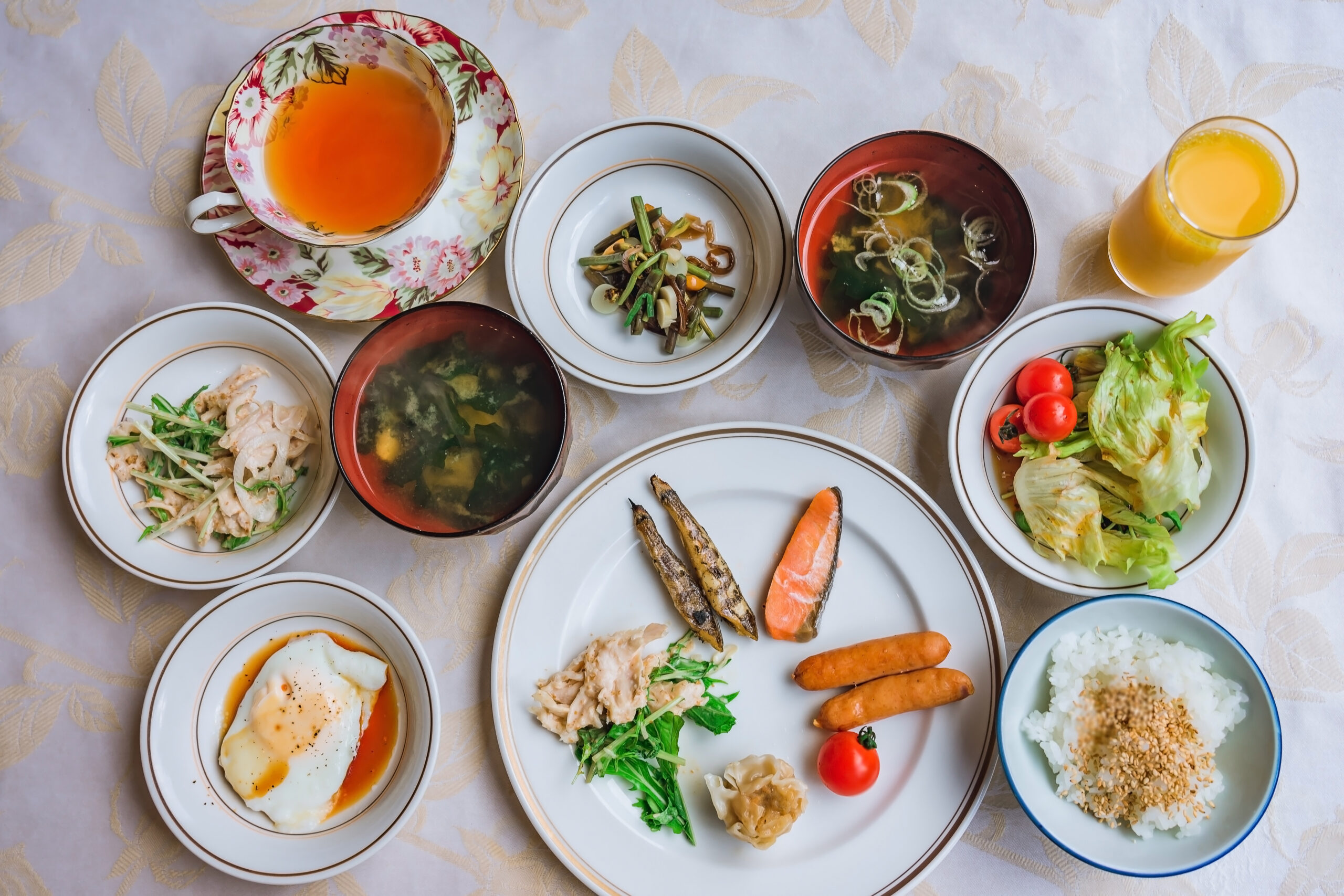
A typical Japanese breakfast looks nothing like what most people outside Japan are used to. Instead of toast, cereal, or eggs and bacon, the traditional morning meal in Japan is a full savory spread — warm rice, a bowl of miso soup, grilled fish, pickled vegetables, and one or two small side dishes, all served at the same time. It is balanced, deliberate, and built around the same flavor principles that define Japanese cooking at every other meal. Understanding what Japanese people eat for breakfast, and why, gives you a clearer picture of how food culture works in Japan more broadly.
What Do Japanese People Eat for Breakfast
The short answer is: rice, miso soup, and whatever sides the season and the household call for. Traditional Japanese breakfast is structured around the ichiju sansai model — one soup, three sides, and a bowl of steamed rice at the center. Every component serves a nutritional and flavor purpose, and the whole meal comes together quickly once you know the format.
A Japanese breakfast foods list typically includes short-grain white rice, miso soup, grilled or baked fish (most commonly salmon), tamagoyaki (a rolled sweet-savory omelet), pickled vegetables (tsukemono), natto (fermented soybeans), and nori (dried seaweed sheets). Not every household eats all of these every morning, but some combination of them forms the backbone of a traditional Japanese breakfast.
Traditional Japanese Breakfast Foods
Rice is the starting point of any traditional Japanese breakfast. Short-grain Japanese rice, cooked until tender and slightly sticky, is eaten plain or accompanied by small condiments like umeboshi (pickled plum) or a raw egg cracked over the top. The goal is clean, simple starch that supports the saltier, umami-rich sides around it rather than dominating the flavor of the meal.
Miso soup at breakfast follows the same logic as miso soup at any other meal. A light dashi base gets seasoned with miso paste, and available ingredients — tofu, wakame seaweed, daikon radish, green onion — get added before serving. The soup is warming, rich in fermented depth, and takes about five minutes to prepare from scratch. Most Japanese households make it fresh every morning rather than reheating anything from the night before.
Japanese Breakfast Salmon
Grilled salmon is the most common protein at a traditional Japanese breakfast. A portion of salmon — typically lightly salted the night before — goes under a broiler or into a fish grill until the skin crisps and the flesh flakes apart easily. The salting draws out moisture and concentrates the flavor, so even a simple piece of salmon at a Japanese breakfast tastes more complex than one prepared without the advance seasoning.
Salmon is not the only option. Mackerel (saba), horse mackerel (aji), and dried sardines (niboshi) also appear regularly at Japanese breakfast tables, depending on the region and what the season offers. In coastal towns, whatever was caught recently tends to show up at the morning table before anything else.
Tamagoyaki: The Japanese Breakfast Omelet
Tamagoyaki is a rolled omelet made by cooking thin layers of egg in a rectangular pan, rolling each layer over the previous one until you have a compact log that is slightly sweet, slightly savory, and tender throughout. It is one of the signature traditional Japanese breakfast foods and requires a specific rectangular pan along with some practice to get the rolling technique right.
The seasoning varies slightly by household. Some add dashi and mirin for a more savory result; others add a small amount of sugar for a sweeter finish. A bento-box version tends to be sweeter, while a ryokan breakfast version is usually more subtly seasoned. Either way, tamagoyaki is one of the small reliable pleasures of a proper Japanese breakfast.
Ichiju Sansai: The Framework Behind the Meal
Ichiju sansai is the organizational principle behind traditional Japanese breakfast and most other Japanese meals. The name means one soup, three sides, and it describes a meal where one bowl of rice sits at the center, one soup accompanies it, and three small dishes provide protein, vegetables, and pickles in some combination.
This structure is not a rigid rule so much as a flexible framework. A simple weekday breakfast might manage only one side dish instead of three. A formal ryokan breakfast might far exceed the structure, presenting a dozen small dishes alongside the rice and soup. The underlying logic — balance, variety, and seasonal awareness — stays consistent regardless of how many dishes actually reach the table.
Ichiju sansai naturally produces nutritional balance without requiring deliberate planning. Rice provides carbohydrates, fish or eggs provide protein, fermented foods like miso and pickles support digestion, and vegetables add fiber and micronutrients. It is one of the reasons the traditional Japanese diet consistently appears in research on longevity.
Japanese Breakfast Rice
Rice at a Japanese breakfast is not an afterthought — it is the structural center of the entire meal. Short-grain koshihikari rice is the most prized variety for this purpose. It is stickier and slightly sweeter than long-grain varieties, holds its shape well enough to pick up with chopsticks, and is soft enough to eat comfortably without much effort.
Some households eat ochazuke for breakfast — cold leftover rice with green tea or dashi poured over the top, finished with pickled plum, nori, or sesame seeds. It is a quick preparation that uses up leftover rice and tastes more satisfying than it sounds. The warm liquid softens the cold rice and the toppings add enough flavor to make it a proper meal.
Miso Soup as a Breakfast Staple
Miso soup is so central to a Japanese breakfast that asking what Japanese people eat for breakfast without mentioning it would miss the point entirely. The fermented paste that forms the base — whether white, red, or blended — is one of the most important flavor components in the Japanese pantry, and starting the morning with it means starting with umami and fermented benefit together.
The ingredients inside the miso soup change by season and region. Autumn brings mushrooms and root vegetables; summer brings soft tofu and lighter additions. The dashi base stays consistent — usually kombu and bonito — and the ritual of warming the soup while the rice finishes cooking is built into the rhythm of a Japanese morning.
Many Japanese people say they can tell how their day is going to go based on the first sip of their morning miso soup. It is a small ritual that carries genuine comfort, and the few minutes it takes to prepare it from scratch each morning is rarely considered a burden in households where it is a daily habit.
Natto: An Acquired Taste Worth Knowing
Natto is fermented soybeans, and it is one of the most polarizing foods in Japanese breakfast culture. The fermentation produces a sticky, stringy texture and a strong smell that many people outside Japan find challenging on first encounter. Most Japanese people who grew up eating natto eat it regularly and find it deeply comforting. Most people who encounter it as adults need some time to adjust.
Natto is eaten over rice, stirred with a little soy sauce and mustard until it becomes even stickier, then poured directly over hot grains. The texture softens slightly when it hits warm rice, and the flavor mellows from the soy sauce and the heat. Nutritionally, natto is remarkably dense — high in protein, vitamin K2, and the enzyme nattokinase, which researchers have studied for potential cardiovascular effects.
It is one of those foods that rewards patience. People who give natto three or four honest attempts often find that the flavor becomes genuinely appealing, especially with the right amount of soy sauce and a properly warm bowl of rice underneath it. For people who find the smell the main obstacle, eating natto with the rice right away rather than letting it sit helps significantly. The warm rice absorbs some of the fermented character and the experience becomes more approachable.
How a Traditional Japanese Breakfast Compares to a Ryokan Breakfast
The traditional Japanese breakfast served at a ryokan (Japanese inn) takes the ichiju sansai model and expands it into something close to a formal presentation. A full ryokan breakfast includes rice, miso soup, grilled fish, tamagoyaki, and pickles — plus tofu, natto, soft-boiled eggs, seaweed salad, and seasonal vegetables prepared in multiple small ways.
Eating a ryokan breakfast is one of the most efficient ways to understand traditional Japanese breakfast foods in a single sitting, because every component of the format is represented at its best. If you visit Japan and have the opportunity to stay at a ryokan with breakfast included, take it. That one meal teaches you more about Japanese food culture than most other single experiences will.